Life-Saving Skills Everyone Should Know
St John Ambulance advocates that everyone should know the skills that could be vital when trying to save a life. Let’s look at each of these in turn, so you can be better prepared, know what to do in an emergency and find out where to get further information and help.
Choking
When someone is choking, their airway is partly or completely blocked, often by food. Ask if they are choking and encourage them to try to cough. If they cannot cough, are unable to speak and are very distressed, you will need to help them.
Give the person up to five sharp back blows between the shoulder blades. Support them so that they are leaning forwards while you give the blows, checking after each one to see whether anything has come out.
If five back blows do not work, give up to five abdominal thrusts. To do this, stand behind the person and put your arms around their waist. Place a clenched fist midway between the belly button and the bottom of their chest. Grasp your fist with your other hand and pull inwards and upwards. Check between each thrust to see whether it has worked.
Alternate between back blows and abdominal thrusts. Call 999 if the blockage does not clear and be aware that the person may become unresponsive and require CPR.
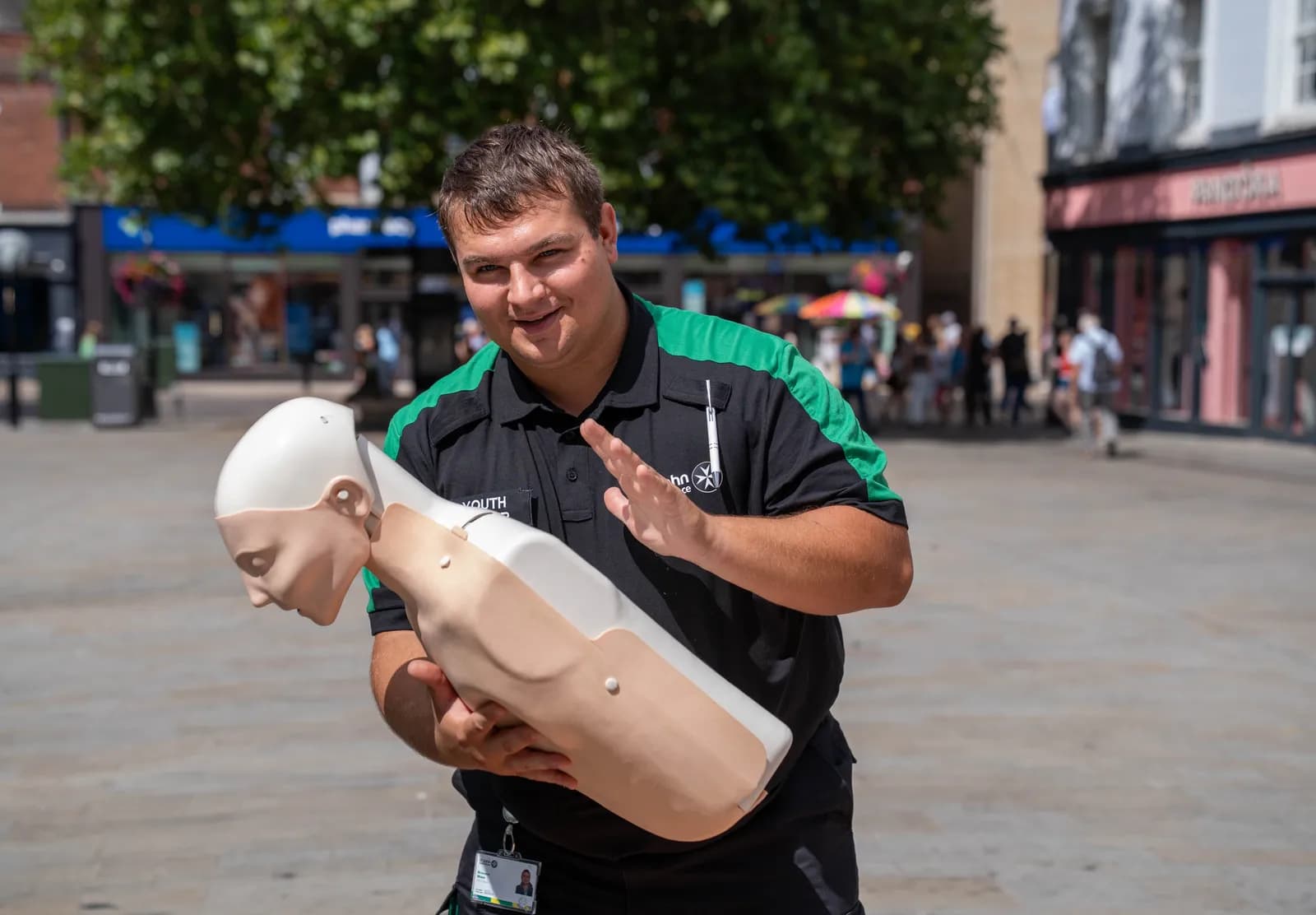
Cardiopulmonary resuscitation (CPR) and using a defibrillator
If someone collapses, first make sure it is safe for you to approach them. Check whether they are responsive by speaking to them and gently shaking their shoulders. If they do not respond, check that they are breathing normally.
Call 999 if they are unresponsive and not breathing normally, or if you are unsure whether they are breathing normally. The emergency call handler will guide you through what to do. If you have been trained to check for a pulse, you can do so, but do not delay calling 999 or starting CPR if you are unsure.
If the person is not breathing normally, start chest compressions. Kneel beside them and place your hands, one on top of the other, in the centre of their chest. With your shoulders directly over their body, push down hard and fast, allowing your hands to come fully back up between compressions.
If you are trained, give two rescue breaths after every 30 compressions. The emergency call handler will tell you what to do and, if someone is with you, may ask them to fetch a nearby available defibrillator.
Once the defibrillator arrives, turn it on and follow its instructions, making sure that chest compressions continue when instructed. The defibrillator will assess the person's heart rhythm and tell you whether a shock is required.
Bleeding and life-threatening haemorrhage
The priority is to stop the bleeding. First, make sure the area is safe for you and, if you have them, put on first aid gloves.
Cover and raise the wound with a clean, non-fluffy cloth or a sterile dressing, and apply direct pressure to the wound. If there is an object embedded in the wound, do not remove it. Instead, apply pressure on either side of the object to push the edges of the wound together. Call the emergency services for advice while maintaining pressure.
The loss of blood may cause the person to develop shock. If possible, lie them down, raise and support their legs, and loosen any tight clothing. Covering them will also help to keep them warm.
If the bleeding is not controlled and comes through the dressing, remove it and reapply pressure using a new pad. If the injury is very severe, the emergency call handler may advise you on how to improvise a tourniquet.
We hope that you will never need to use these skills, but it is much better to be prepared. For more information on any of the topics discussed here, or to find online and face-to-face training opportunities, visit the official St John Ambulance website.